
Practical guide · 2027
2 August 2027 solar eclipse: where, when and how to watch
On Monday 2 August 2027, a total solar eclipse will cross southern Spain, North Africa and part of the Arabian Peninsula. Mainland France will experience a partial eclipse: these are two very different viewing situations.
Updated 31 October 2026
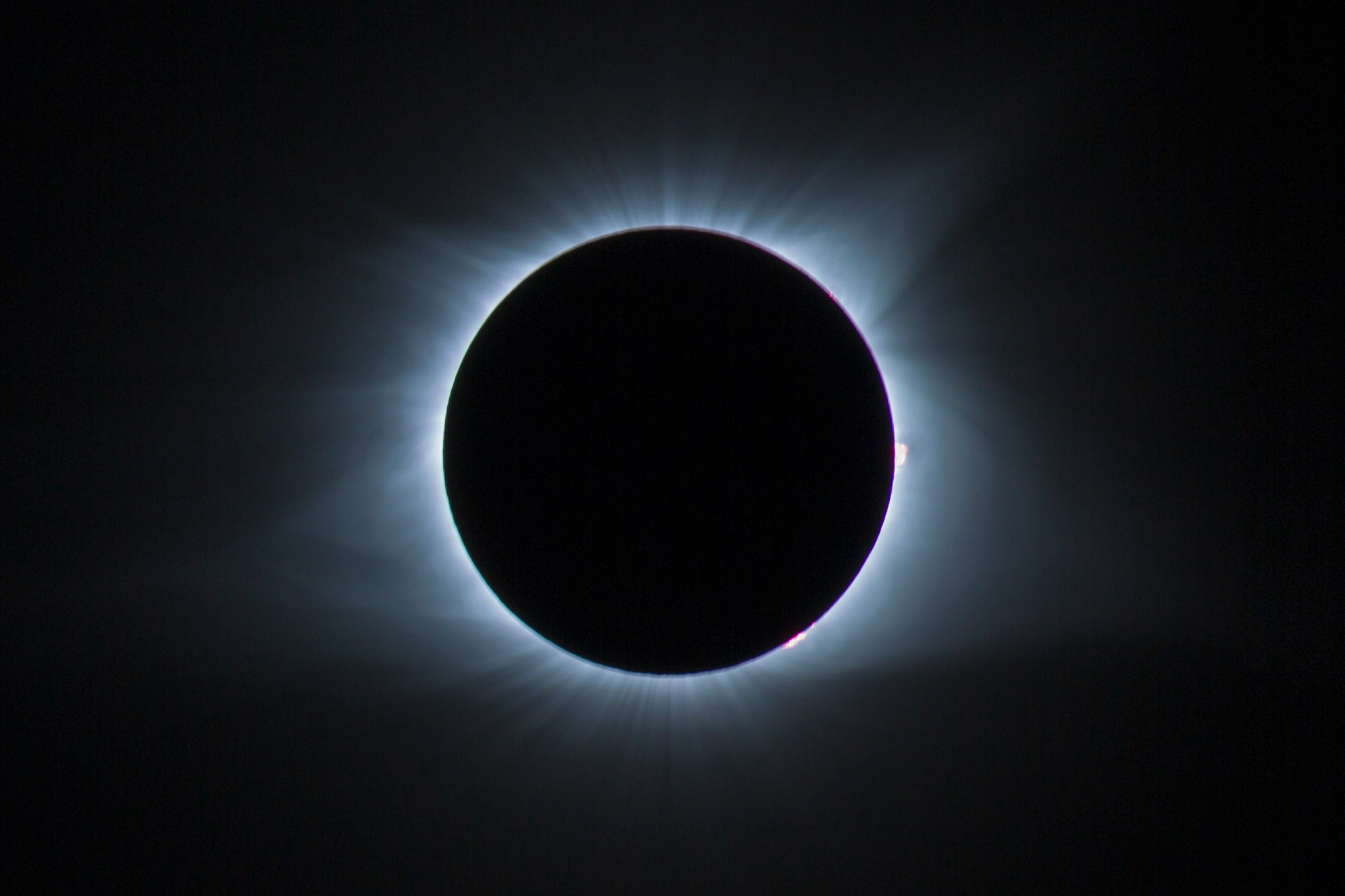
Why does a solar eclipse happen?
The alignment
The Moon passes between Earth and the Sun and blocks some or all of the Sun’s visible disk for an observer on Earth.
Total or partial
Totality occurs only inside a narrow path. Outside it, only a portion of the Sun is obscured.
Where will it be visible?
Path of totality
The path crosses southern Spain, Morocco, Algeria, Tunisia, Libya, Egypt, Saudi Arabia, Yemen and Somalia.
France and Europe
A partial eclipse is visible from mainland France and much of Europe, with different coverage in each city.
At what time?
There is no single local time for everyone. Check predictions for your exact location and time zone.
How to observe safely
Partial phases
Use suitable undamaged eclipse glasses or a safe solar viewer. Regular sunglasses are never adequate.
The short total phase
According to NASA, unfiltered naked-eye viewing is possible only during complete totality and only within the totality path; replace protection as soon as bright sunlight returns.
Telescopes and binoculars
Eclipse glasses do not protect your eyes when looking through an unfiltered optical device. Use an appropriate solar filter correctly secured at the front of the instrument.
Local conditions, weather and timing must always be checked. The maximum global totality duration of about 6 min 23 s does not apply everywhere.